Gargoyle Gecko Morphs
🦎This page is under construction! Please check back for updates!🦎
Below are the gargoyle morphs we currently work with and what we look for in gargoyle structure. Much is unknown about how traits are inherited with gargoyles and at this time, and most are considered polygenic, like stripe/blotch intensity, base color, pattern and boldness and so on. There are some potential recessive and incomplete dominant traits that some folks are working with, but much more needs to be done in this area. I feel like gargoyles are where crested geckos were at a few years ago and it’s only a matter of time before some very interesting genes start to pop up in collections.
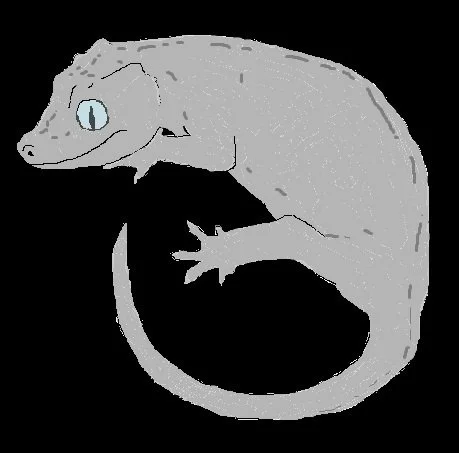
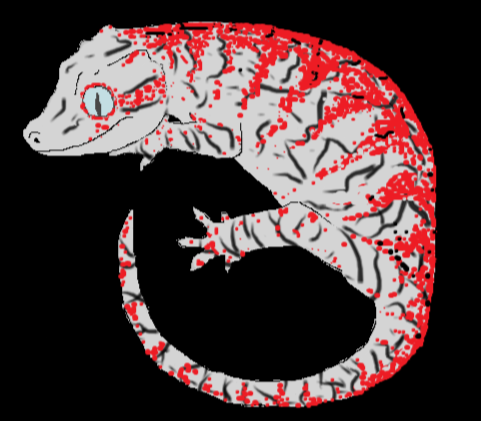
Fig. 1. Base color refers to the color of the gecko without any pattern or color markings. It’s the blank canvas the rest is added upon. Geckos can fire their base color up or down.
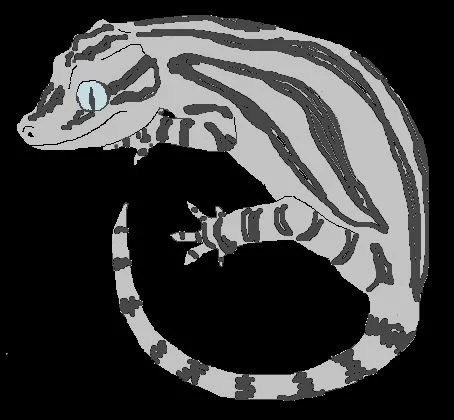
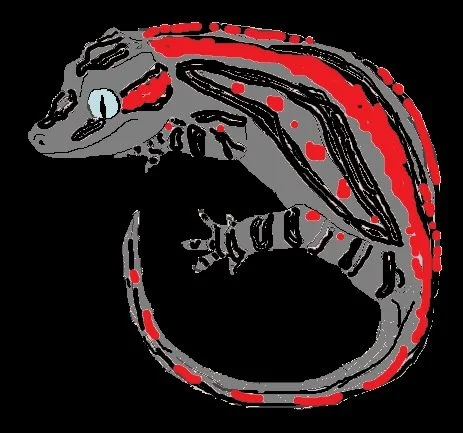
Fig. 2. Base pattern is the pattern that sits underneath the bright color pattern (if present). This example shows a striped base pattern. The base color is gray and the base pattern color is black when fully fired.
Fig. 3. Color pattern is the red or orange stripes and blotches that appear on top of the base pattern. This example shows a fully fired up red super stripe with a gray base and black base pattern color.
Base Color, Base Pattern, Base Pattern Color, and Color Pattern
Base pattern, base pattern color, base color, and color pattern (stripes/blotches) are all described separately when talking about gargoyle geckos. Most traits are considered polymorphic at this time so folks have come up with different vocabulary to describe the geckos in their collections. With that said, below is what I have gathered and gleaned from the hobby over the years. I credit Gargoyle Queen Reptiles for being one of the first to describe gargoyle morphs on the inter-webs, and Tiki’s Geckos for putting this vocabulary into video format. Check out resources and references for links!
The most common base pattern types are reticulated and striped. When referring to base pattern we’re talking about the pattern that sits underneath the color pattern and on top of the base color. Base pattern is usually either black or brown or a combination of both (base pattern color) and can fire up/down like the base color, and even separately from the base color.
Base color refers to the overall color of the gecko, it is the empty canvas that’s left after all the base pattern and color pattern is removed. Base color typically changes from unfired to fired states depending on the environment and the gecko’s mood (See. Fig. 4 & 5). More on base color below.
Color pattern describes the colorful red and orange pigment/color stripes and blotches that seem painted on top of the base pattern (Fig. 3). These color patterns are extremely variable and typically the highest priced animals have the highest coverage of red and orange pigment across their bodies. It’s important to note however that coverage is not the only thing to breed or select for in gargoyles, but health and body structure should always come first.
Crested and gargoyle geckos, and leos to a degree (some much more than others), are able to change color due to a process called pigment translocation, which involves the movement of pigment molecules within specialized cells called chromatophores (check out chromatophores on Wikipedia). Fired refers to when a gecko is most colorful and these pigments are most spread out throughout cells. And unfired/fired down is when they are generally the least colorful and pigments are aggregated in the center of cells. This leaves the majority of the space within the cells without pigment molecules and thus, color.
There are several types of chromatophores in reptiles that include melanophores (black and brown pigments) and xanthophores (yellows, oranges and reds). A third type, iridophores, reflect light due to their structure, and can make scales look blue, or a color in combination with blue, like green or purple when other pigments are involved. See Genetics and biology of coloration in reptiles: the curious case of the Lemon Frost geckos and Why Is Blue So Rare In Nature? for more on the biology behind gecko and animal coloration.
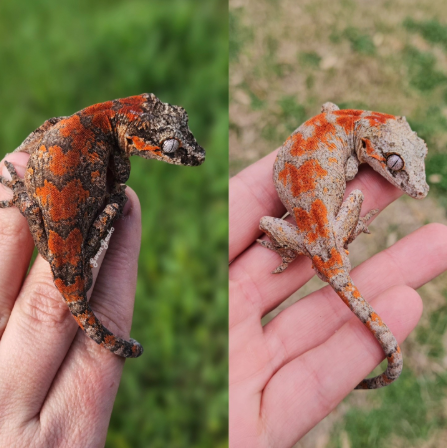
Fig. 4. Sunspot fired up and down. Both base pattern color and base color are affected, but color pattern (blotches) are not.
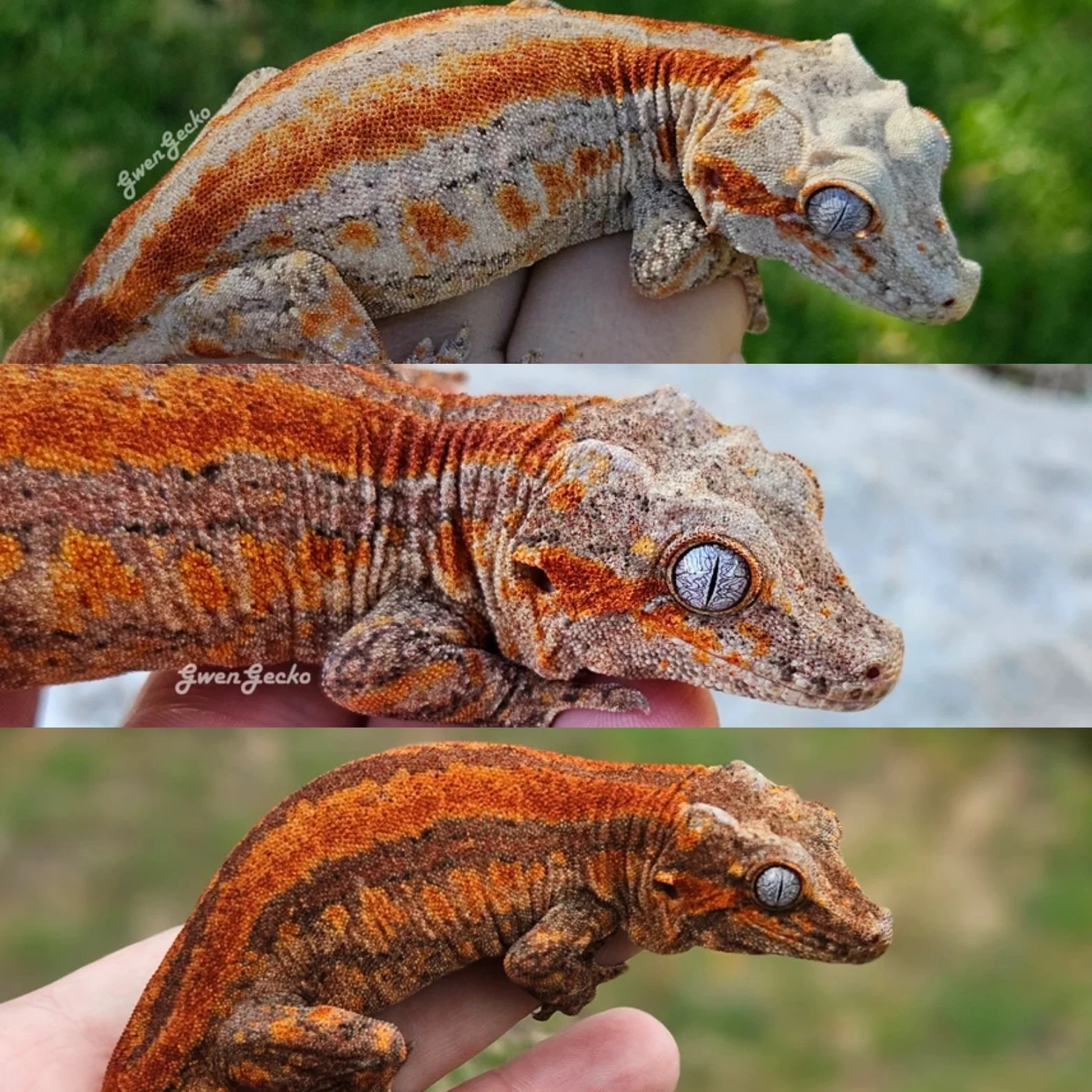
Fig. 5. From top to bottom: Lady Marmalade fired down (she can go lighter than this even), mid-fired, and fully fired up. Note her base pattern stripes are barely there.
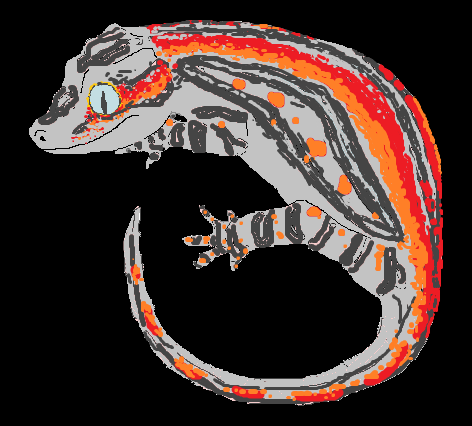
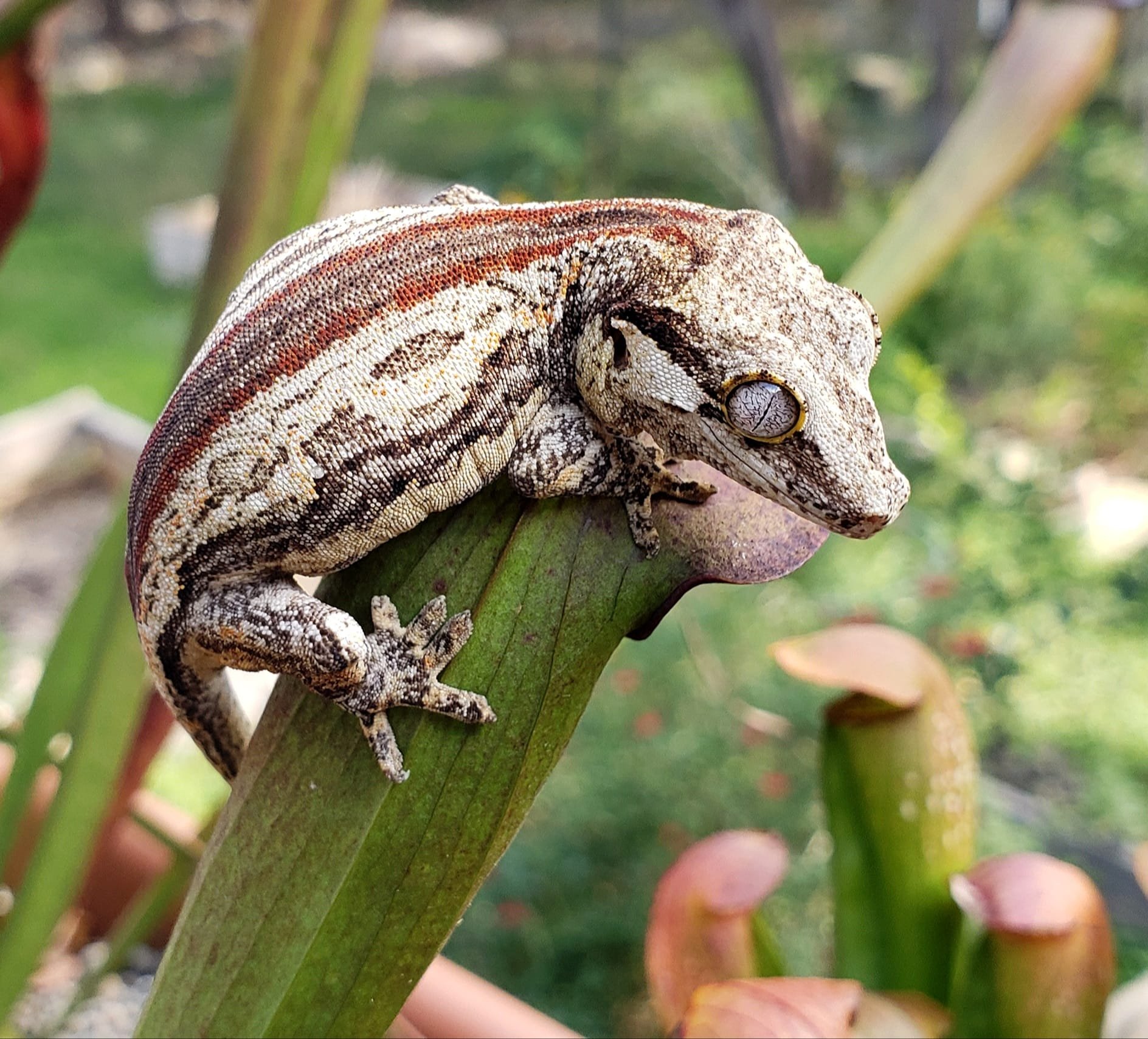
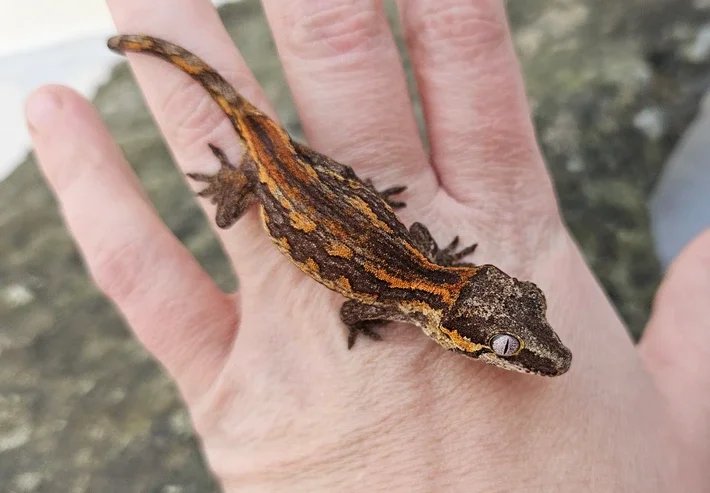
Fig. 9. Red & White super stripe gargoyle with a black & white base
Fig. 8. Bicolor Super Stripe w/lateral blotching
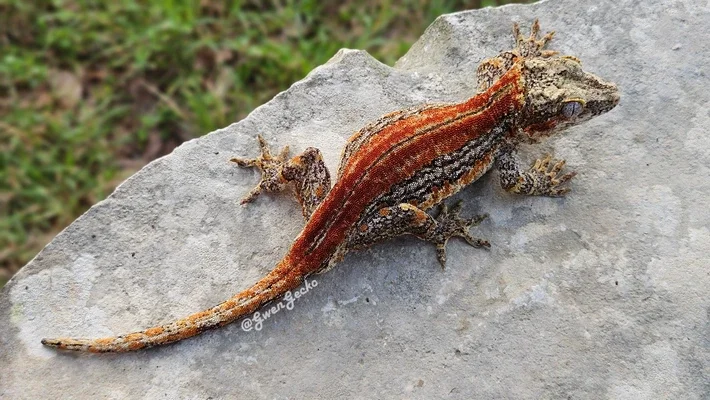
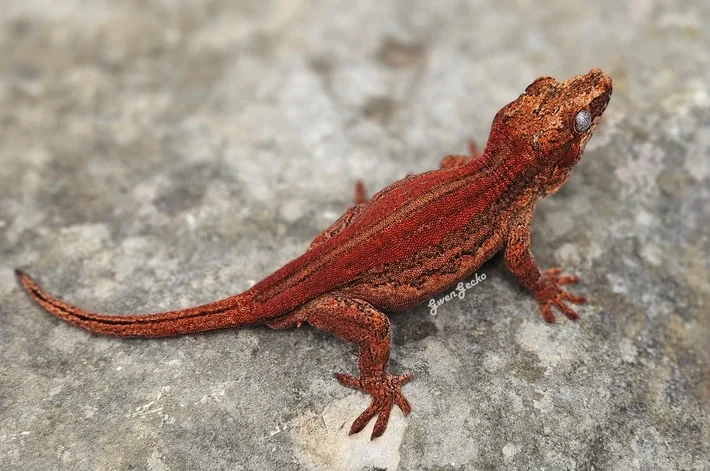
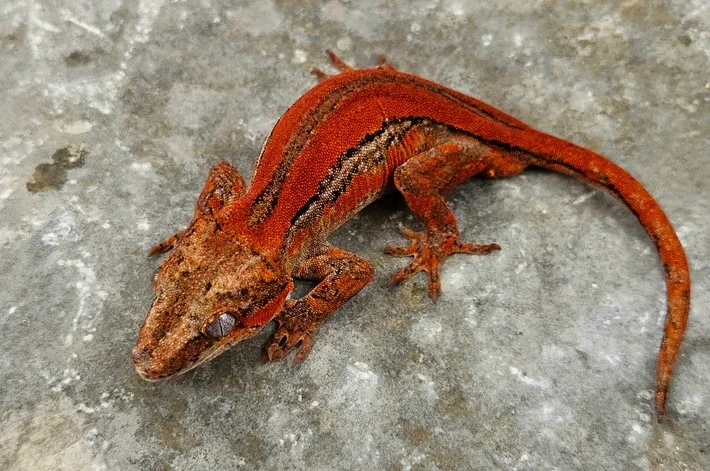
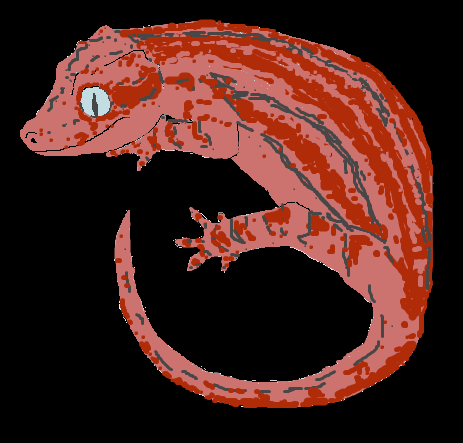
Fig. 7. Reverse Bacon with brown base and brown base pattern, yellow eye ring and blue eyes.
Fig. 6. Red Six-Stripe with a Red base and black pattern coloring (fired down), a red eye ring, blush and lipstick.
Fig. 11. Wonton - Rusty orange bicolor super stripe with a light gray base color. I’d consider him a medium expression 6-stripe even.
Fig. 10. Surimi- Red aberrant stripe w/banded tail and lateral blotching on a brown base.
Fig. 13. Derecho - Orange six stripe with black pattern markings and gaining an orange base color. His color stripes may be turning red.
Fig. 12.Vulcan - red quad super stripe with a red base, brown pattern color, red eye rings and blue eyes
Stripes & Color Pattern
Striped describes a gargoyle whose base pattern has dorsal and lateral striping, but has a banded tail. Striped animals can have several smaller dorsal stripes along the spine, or a single bold solid stripe. The lateral stripes run from the shoulders & armpits to the flanks and hips. They too can be either a single bold stripe (rarer) or several horizontal stripes. Most gargoyles have a pair of these lateral base pattern stripes on each side.
Aberrant striping refers to pattern stripes that are irregular along the body, and most commonly seen in the lateral stripes (Fig. 10. Surimi).
Super Stripe refers to gargoyles that have base pattern striping that extends all the way down their tails (Figs. 11-13.). This term has also been used to describe high color pattern coverage geckos, such as six-stripes, but most folks use it to describe the base pattern.
Quad Stripe is a lesser used term but it describes a gargoyle with four color pattern stripes on its back (Fig. 12. Vulcan). Six-Stripe is a Quad Stripe animal that also has full lateral color pattern stripes (Fig. 13. Derecho). Lower expression six stripes will have color pattern spots along their lateral pattern stripes (blotched laterals), however these geckos are not usually called six stripes (Figs. 11. & 14).
There is a distinction to be made when describing bacon animals and Bacon line animals, though the original term has been gradually replaced with bicolor to describe an animal with more than one color in their color pattern. Most bicolor geckos have a pair of red dorsal stripes, and then a pair of orange stripes just to the outside/below the red stripes (Fig. 14. Darkness). Blotches can also be bicolor and have both red and orange blotches (Fig. 4. Sunspot).
Bacon Line gargoyle geckos are a line originally established by Carl Vargas of South Tex Gex (Also Fig. 14. Darkness).
Reverse bacon is a term used to describe when the orange and red on a bicolor gecko are reversed and the orange is the more dorsal of the two. Lady Marmalade is an excellent example of a rusty orange reverse bacon (Fig. 5.). She has two distinct colors (rusty orange and a lighter orange) and the lighter of the two is the more dorsal one. She also has a few random golden yellow spots.
Orange color pattern on many younger bicolor geckos often turns red as they mature. But there are several breeders working with orange geckos to refine the color and bring out the brightest oranges without turning red with age or getting rusty.
Rusty is a term sometimes used to describe darker orange stripes that have burnt orange/rusty-red areas (often on the neck/hips) on an otherwise orange-striped (or blotched) gecko (See Figs. 11. Wonton and 5. Marmalade).
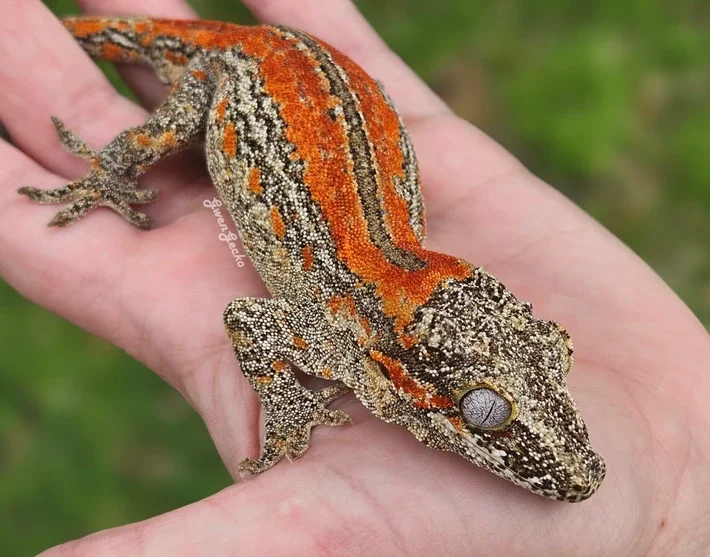
Fig. 14. Darkness - red and orange bicolor super stripe with a dark gray base, silver eyes and yellow spectacles, from CV Bacon lineage
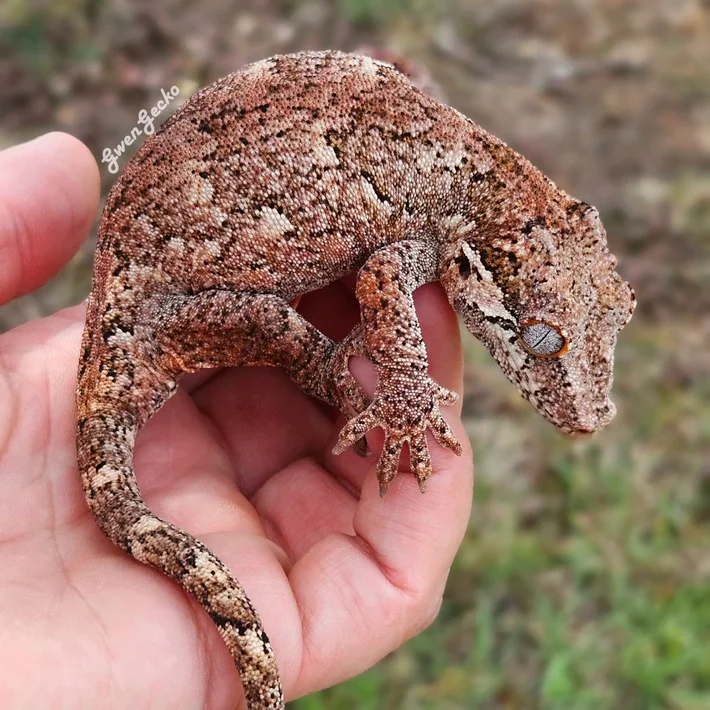
Reticulated & Blotched
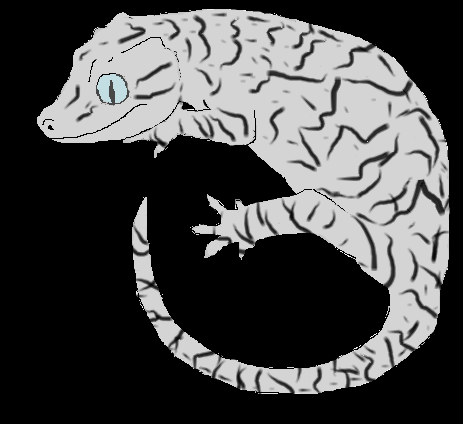
Fig. 12. Primrose - Reticulated with pink base color and peach spectacles
Reticulated
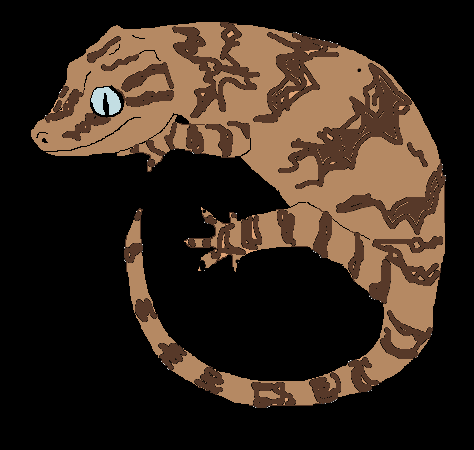
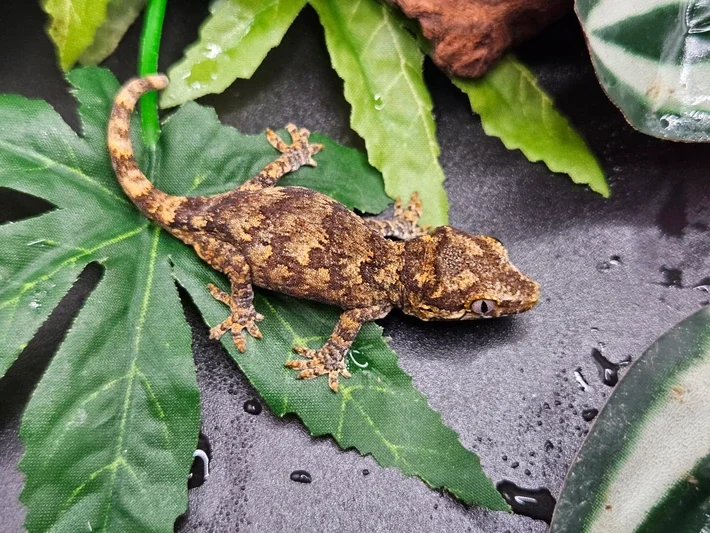
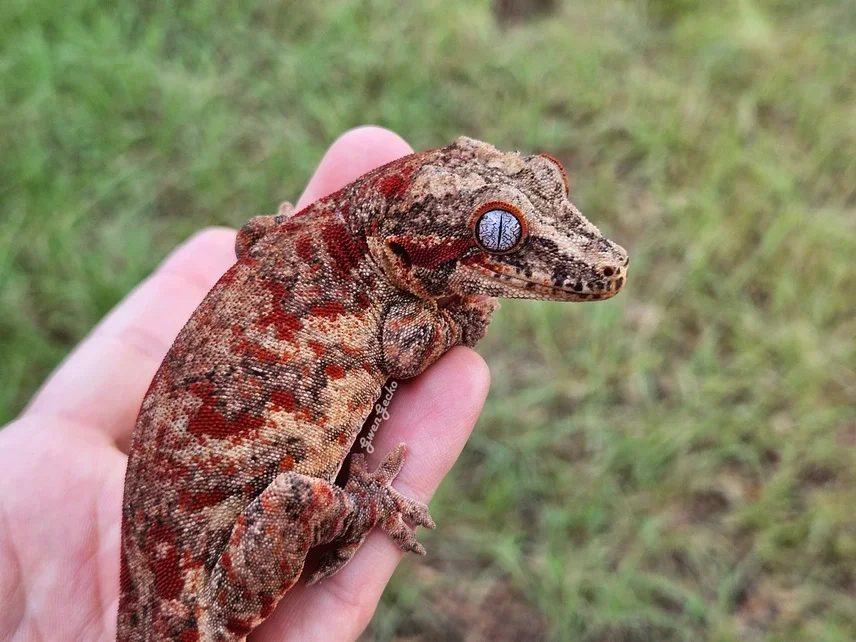
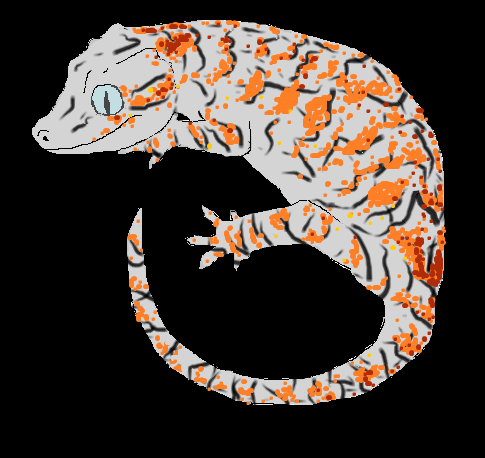
Fig. 14. Diablo - Red blotch with a light brown base, blue eyes, lipstick markings and red spectacles.
Reticulated - Rusty Orange Blotch, gray base color, black base pattern color
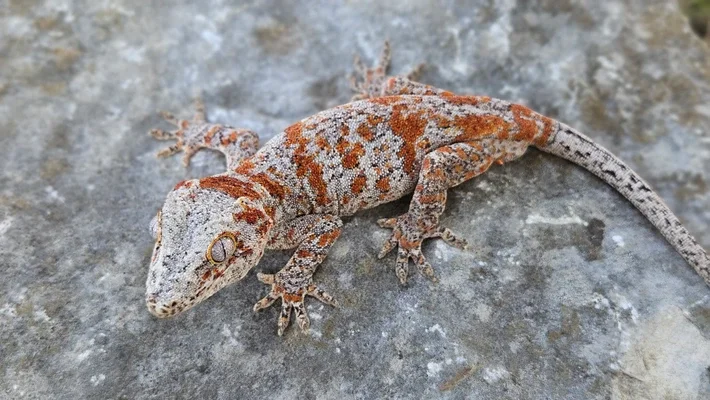
Fig. 6. Salem - Light orange/yellow mottled super blotch with blue eyes, yellow spectacles, and a light gray base color.
Reticulated - Mottled Orange Blotch.
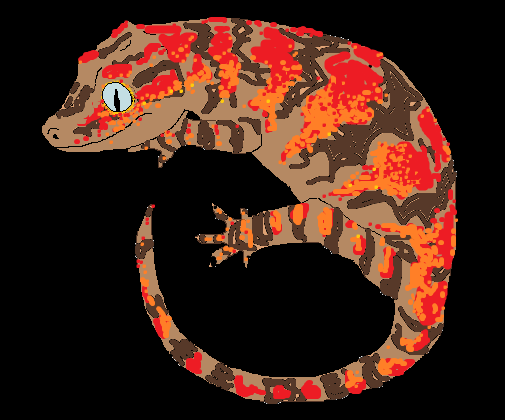
Reticulated - Bicolor Banded Super Blotch w/eyebrows, blushing, and lipstick markings, brown base and brown base pattern coloring
Fig. 1. Gizmo - mottled rusty orange super blotch and a brownish-orange base color.
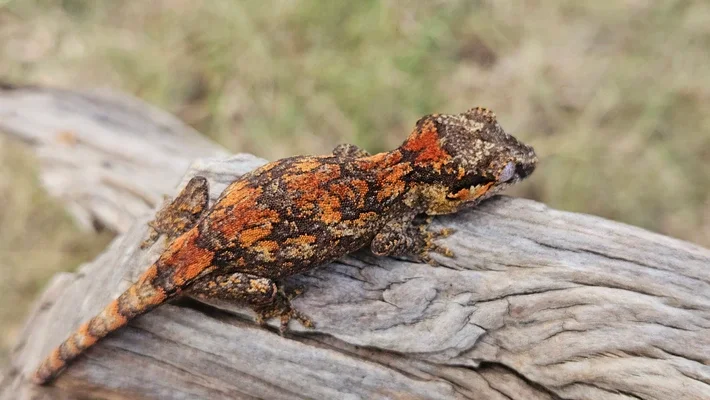
Reticulated - Red Skeleton Blotch w/gray base and black pattern color.
Fig. 18. Pluto - Banded bicolor super blotch with a brown base.
Fig. 13. Donut - Banded reticulated with a yellow-brown base and brown pattern markings
Reticulated - Banded
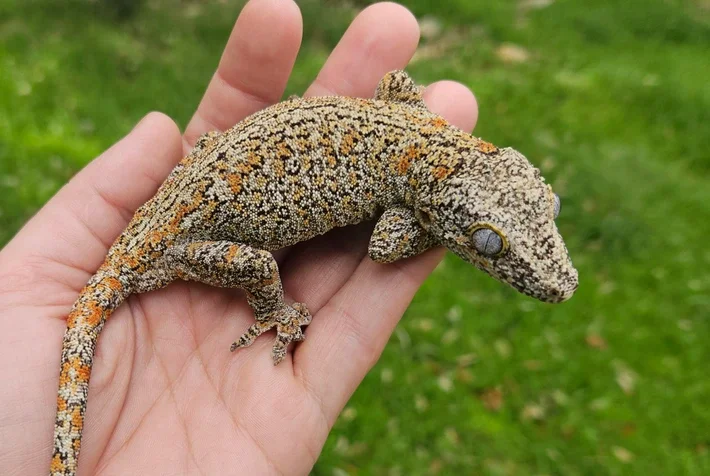
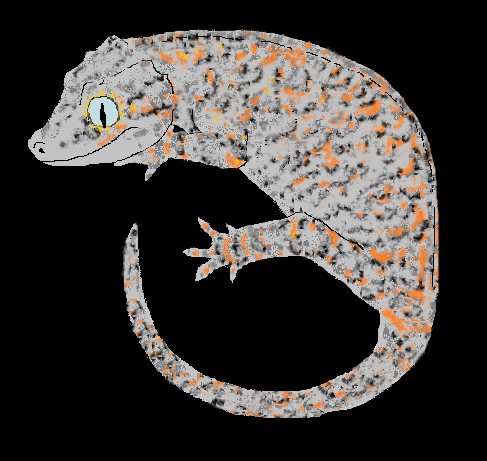
Reticulated
Banded
Blotched
Mottled Blotch
Super Blotch is another term that is sort of subjective. Some folks say a gecko needs to have 50% color pattern coverage to be a super blotch. I think an animal with larger blotches than normal, or covered all over in tiny blotches could also qualify, as they are definitely different than the original blotched animals. Some super blotches will look like they have tiger striping, and others will have big dorsal blotches. Some have so much pigment the blotches all run together and they look like they’ve had paint dropped onto them from above.
Skeleton/Dorsal Blotch
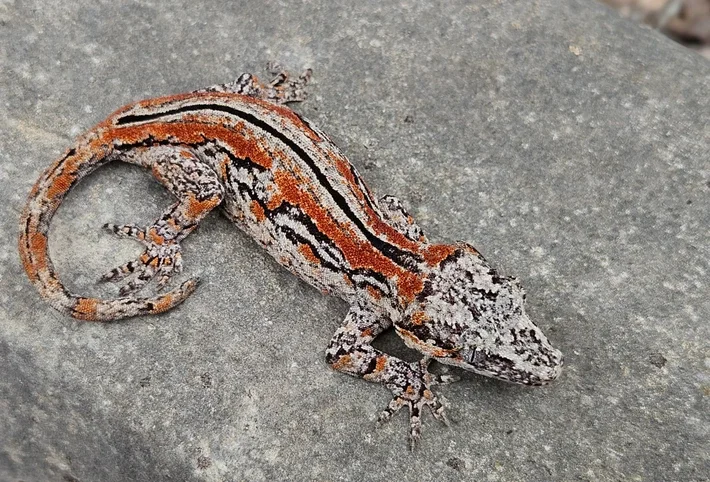
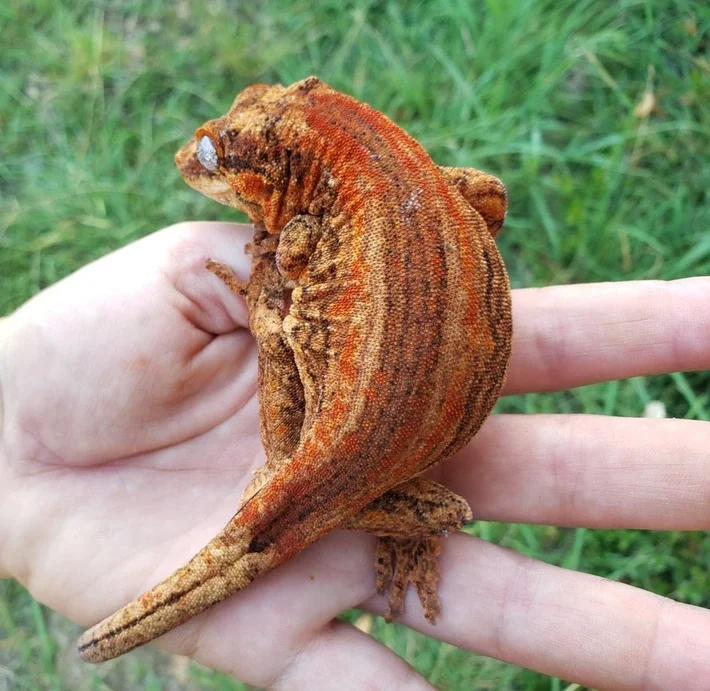
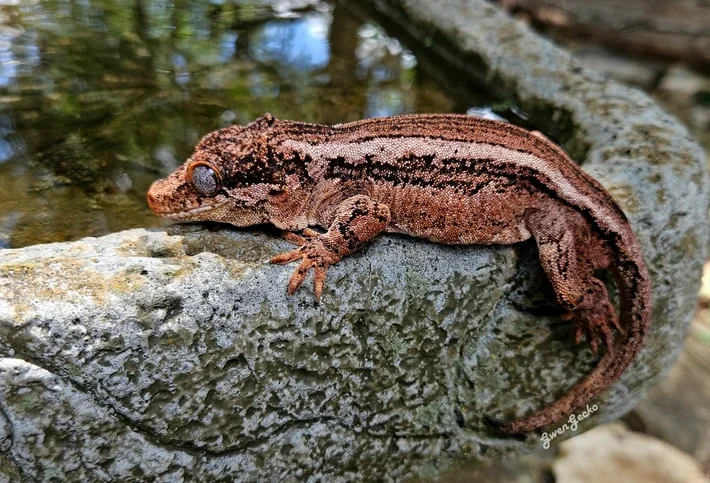
Fig. . Cricket - Rusty orange Mosaic with bold black pattern markings and bold dorsal striping on a light base
Fig. 4. Inigo - Orange base bicolor super stripe
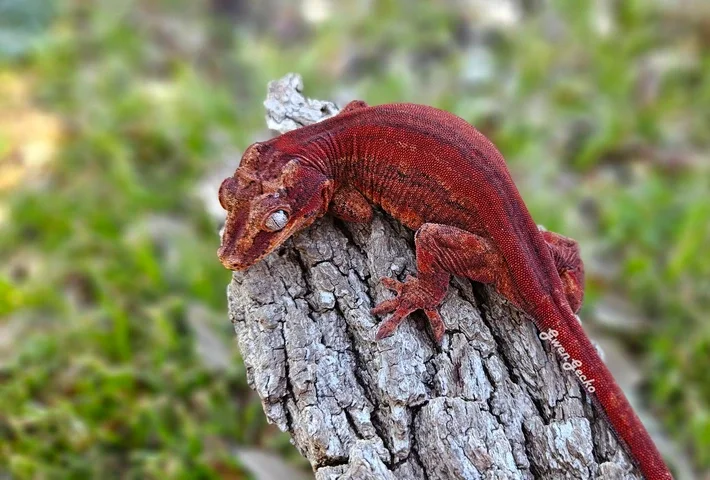
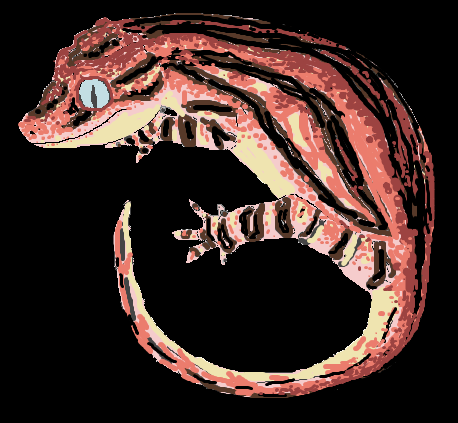
Fig. 5. Merlin - Pink base super stripe with black pattern stripes; possible phantom eye
Fig. 6. Cedar - Red super stripe with a red base
Mosaic
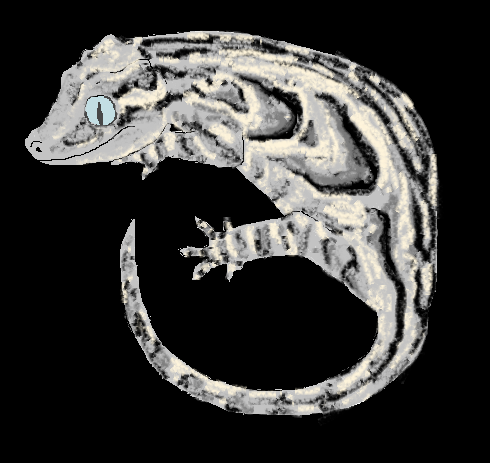
Mosaics can be extremely varied but look like a combination of striped and blotched in their base pattern, and often their color pattern as well.
Clown & Vortex/VOrtex describes a mosaic with distinct circles and/or “V” shapes in lateral base patterning. Some breeders believe it could be a new genetic trait, but others have had varying results. Mosaics in general are striking and really nice ones like Clowns and Vortex geckos are rare, though they are becoming much more popular as of late.
Base Colors & Pastel
Base color can be linebred and “stacked” over generations to increase the saturation of the base color, though it can take a long time for a gecko’s base color to fully develop. For many it takes months, some, a year or even longer than that! Base color expression, much like color pattern expression, can also fade over time and as geckos get older. The best example maintain their base color throughout their lives. Some make it hard to tell though if they stay fired down the majority of the time.
Brown and gray base colors are the most common. Brown includes tan and dark brown base coloring, and gray includes light/white and dark gray base coloring. The best black and white animals have a very clean white base that does not fire up to a darker gray.
Yellow, orange, and pink base animals all describe variations in base color other than brown, white or gray, and I think some folks are also calling the lightest versions of these “pastels.” The best pink animals do not fire up red and have a white under belly; the best yellow base animals should not fire up brown, and the best orange base animals, when fully fired, should have base color extending all the way around including on their bellies.
Red base animals are a sight to behold when fired up. These geckos can appear to be solid brick or blood red at times, especially if they have red striping or blotches (red on red). When fired down they can look pink or lavender.
Purple animals typically have a lavender cast to them and deep lavender-gray tones. Some purple and red base animals fire up an insane deep red base color (sometimes called super red), such as those in the Red Velvet project at Steadfast Lizards and Purple base project at Bergie’s Geckoyles. These animals still have a red or purple base color when fired down, though of course not as intense when fired up.
Pastels have been described differently by different people over the years. My original understanding came from Gargoyle Queen Reptiles and described a light yellow gecko that would fire up brown; but MorphMarket has it as “The Pastel trait flares the white and yellow pigments to black and tan when fired up”. Which I don’t think is accurate anymore considering the “pastel” animals that are now out there. Though many do look yellow or have a yellow cast to them when young. I think we need better terminology to describe what pastel really means. I have seen “super pastels” that look like normals that lack pattern color or have very muted base and base pattern colors. Some have muted color pattern which is really neat to see. They can fire up and really do look pastel orange/pink and purple.
Additional Structure & Eye Traits
Phantom Eye describes a trait where the eye is darker than normal. Most gargoyles have light silver or blue eyes, but the phantom trait turns the eye color to a dark gray.
Exaggerated crests
Crowned Horns
Blush, Lipstick, & Eyebrows (Face Color)
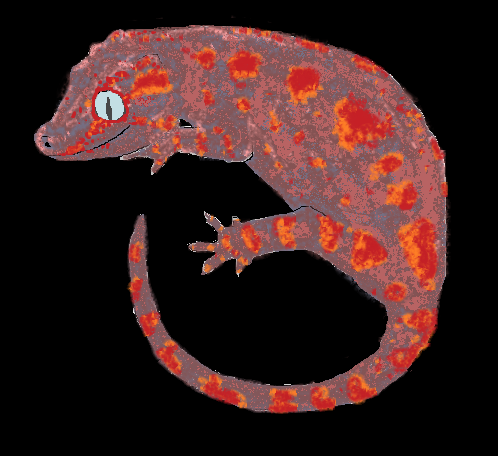
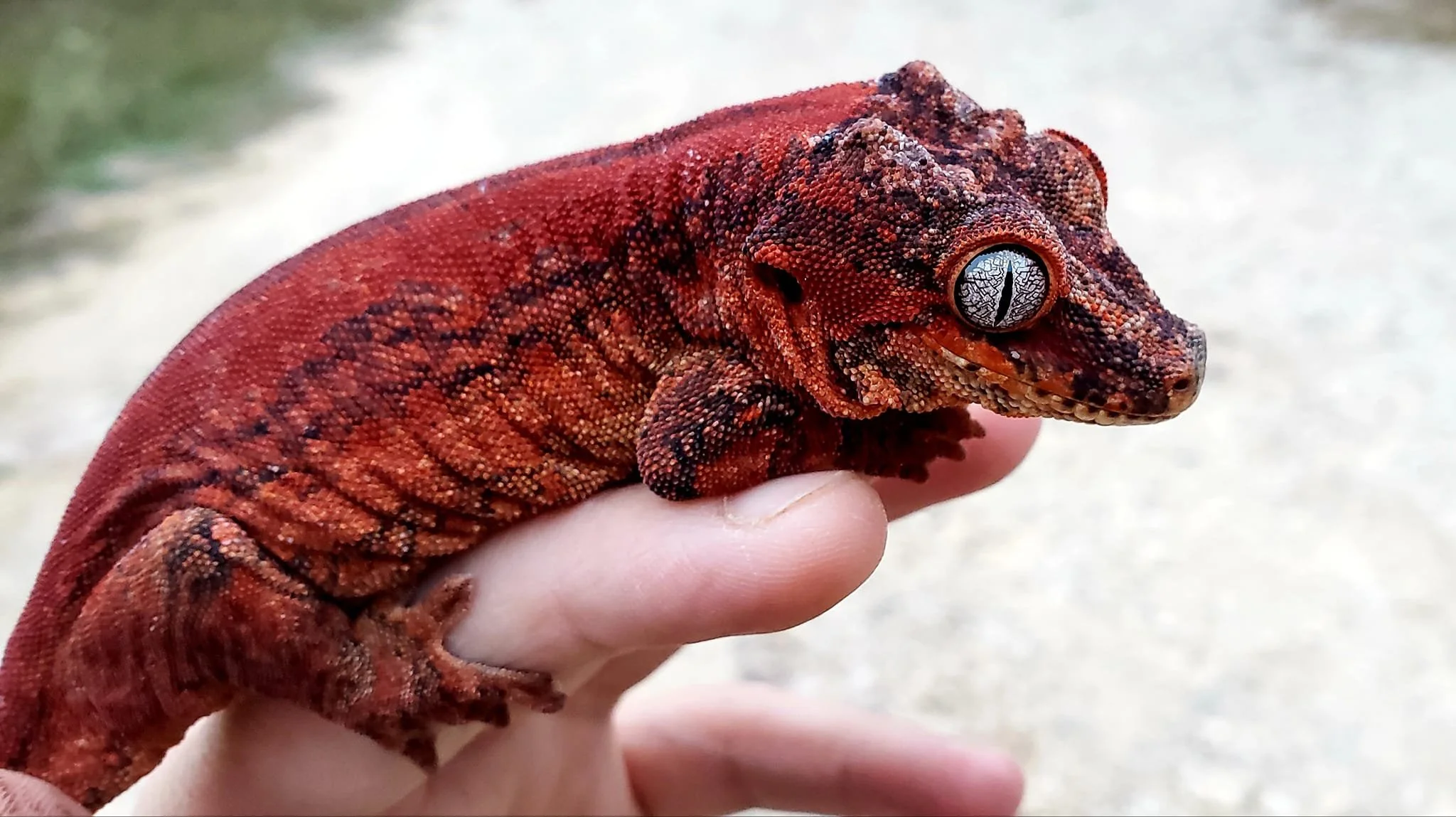
Fig. Bicolor super blotch with a purple base.
Fig. 6. Saoirse and her exaggerated horns (or crests)
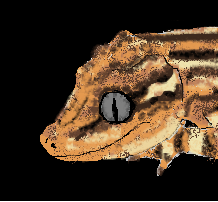
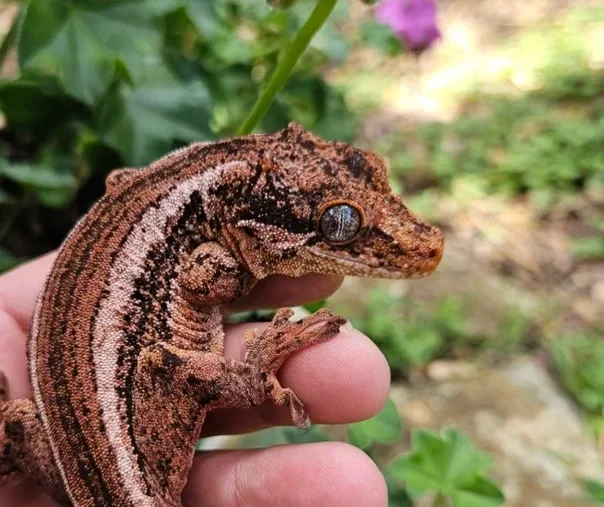
Fig. Orange base w/Phantom eye
Fig. 6. Phantom Eye
Black and White Clown/Vortex/VOrtex - more defined type of mosaic with circles/”v” shapes on the laterals.
Pink Base super stripe
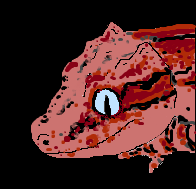
Fig. Exaggerated horns
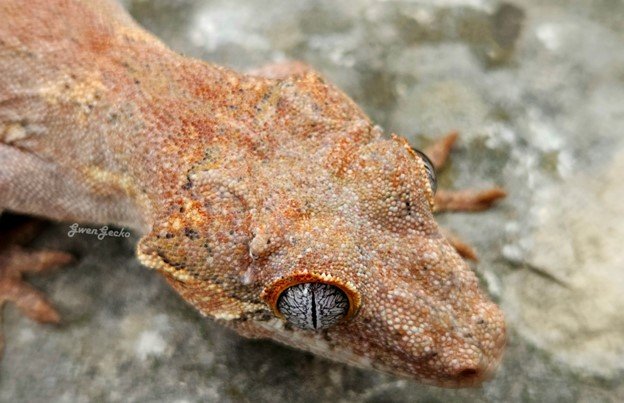
Fig. Crowned Horns on pink base