Gargoyle & Crested Gecko Care Sheet
Check back soon as we are working on this page diligently and expect to complete it soon!
Natural history
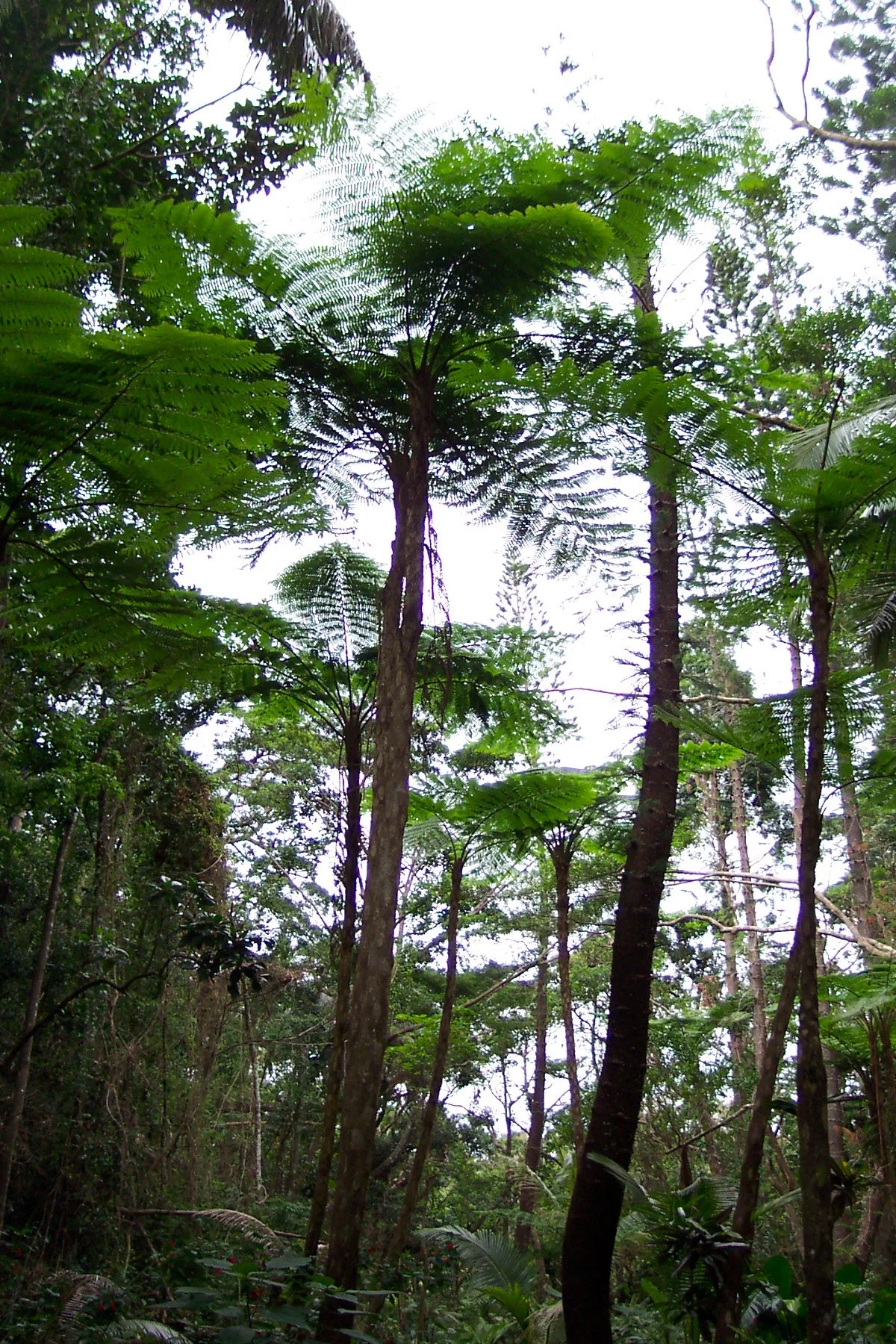
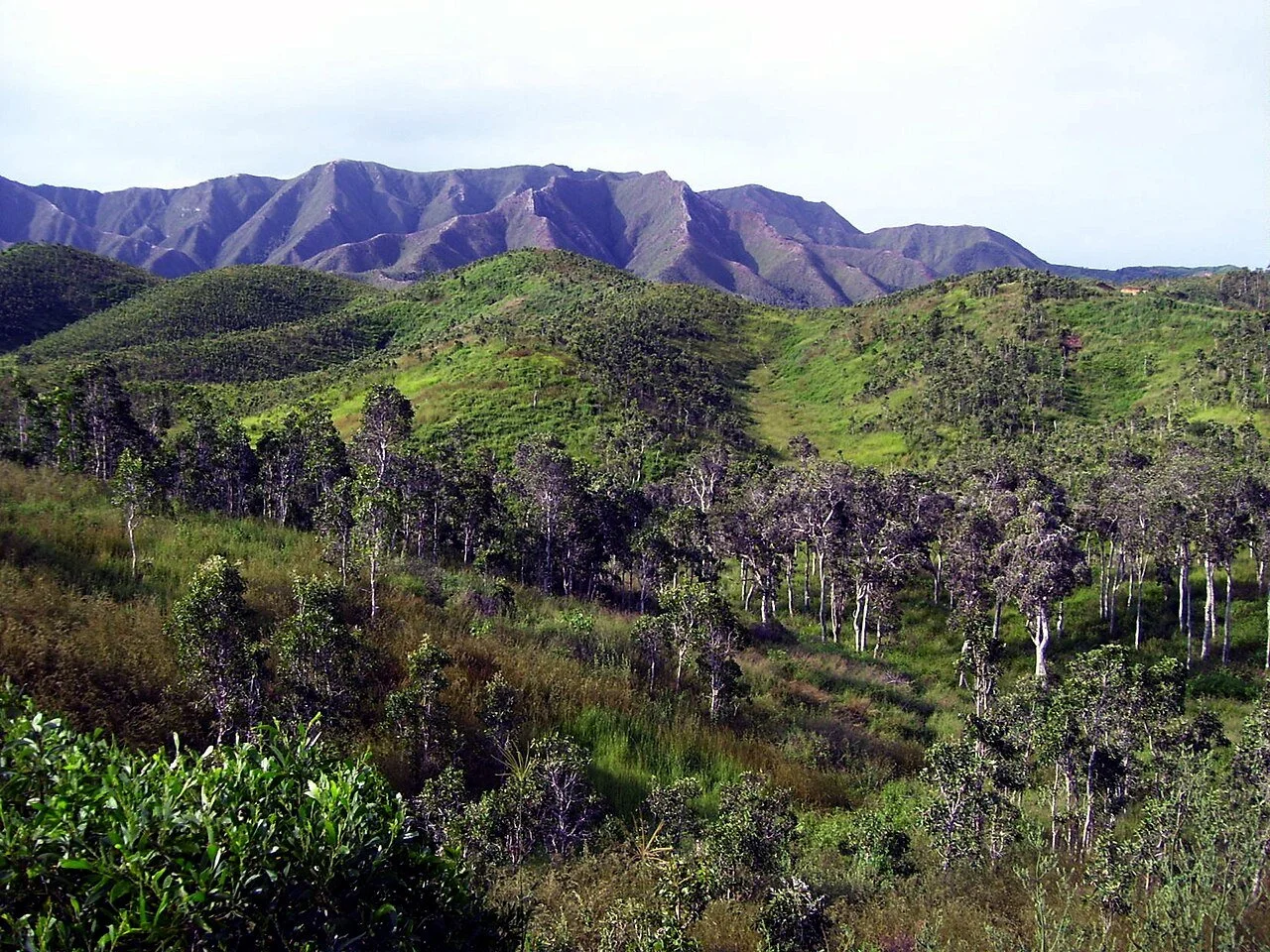
Gargoyle (Rhacodactylus auriculatus) and Crested geckos geckos (Correlophus ciliatus) originate from the isles of New Caledonia.
Check out The Budget Museum’s video The Real Lost World: New Caledonia here.
Check out New Caledonia climate information here: https://www.worlddata.info/oceania/new-caledonia/climate.php
Crested Gecko lifespan in captivity can be upwards of 20+ years with proper husbandry! geckos are a long-term commitment, so it is their keeper’s responsibility to ensure they have a healthy, comfortable, and enriching life.

Housing
These geckos are solitary and should never be housed together. Some folks have been able to house groups of females together for a while, but they are not social and do not thrive in this environment. Rather, they can get territorial and resource-guard until someone gets hurt or starts losing weight. In the wild, gargoyles and crested have the ability to get away from each other if they want to. In captivity, they can’t escape conflict and eventually someone gets hurt or suffers in other ways such as less access to feeder insects and the best spots for thermoregulation. Male geckos can and will fight to the death if kept together. Keeping them singly means no fights or injuries, and better observations of individual gecko’s health.
A minimum size enclosure is 12×12×18 for a juvenile, with 18×18×24 is ideal for a single adult. Clutter helps them feel safe and secure, which encourages them to leave their hiding places.
A basic gecko habitat is great for new &/or sick geckos so they can be more easily monitored. Paper towels make an excellent flooring material in basic setups, as they are cheap and relatively hygienic when replaced regularly. Use of artificial plants in these basic set-ups can provide cover that you don’t have to worry about keeping alive. Artificial plants do need to be regularly cleaned and even sanitized regularly. Basic setups are what we use for our baby and juvenile geckos so we can closely observe their growth and health.
A naturalistic enclosure features a safe substrate and tries to mimic the gecko’s natural habitat. It does not usually have the substrate infrastructure to support a clean-up crew or beneficial bacteria and fungi, but may incorporate live or artificial plants. The substrate will need to be replaced more often than a bioactive one depending on spot cleaning and type.
Bioactive enclosures are excellent for providing enrichment and encouraging natural behaviors and a more gregarious gecko. These enclosures provide a “live” substrate with beneficial bacteria and fungi, and is also home to a “clean up crew” of isopods and springtails. These critters will eat leftover gecko food, decaying plant leaves, old sheds and even poop. You may find that you have to restock your isopods occasionally as some geckos love to eat them. Bioactive enclosures also include live plants, just make sure to use hardy ones that grow fast and don’t mind being trampled on or occasionally dug up.
A mix of both worlds can be achieved by using a substrate with fake plants, or paper towels and small potted plants. For our breeders we use a bioactive substrate and clean up crew, horizontal resting areas using solid foam “pool noodles,” and lots of visual clutter like artificial plants and cork bark flats. Find what combination works best for you and your gecko’s health and wellbeing.
Glass, PVC, front-opening, solid or screened top enclosure? It’s up to you and what works best in your home to provide the optimal environment for your gecko. Some areas are much drier and a screened top tank will have trouble maintaining any sort of humidity without partially blocking the screen top, while a plastic tub in a rack system may hold on to too much humidity if not properly ventilated (i.e. drilled holes/screens). I personally find pvc front-opening enclosures with a screen top to be the most functional and visually appealing, but again find what works best for you and your gecko (and your budget too).
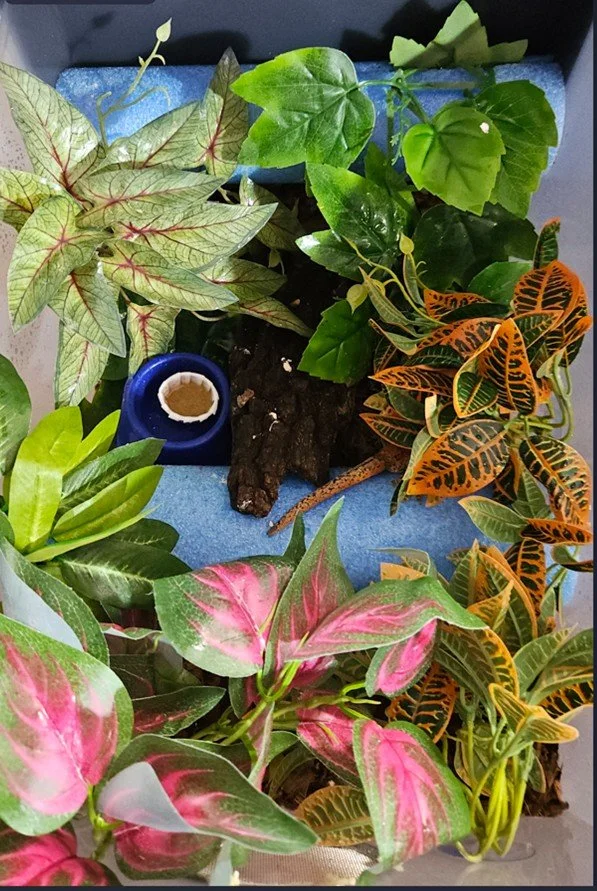
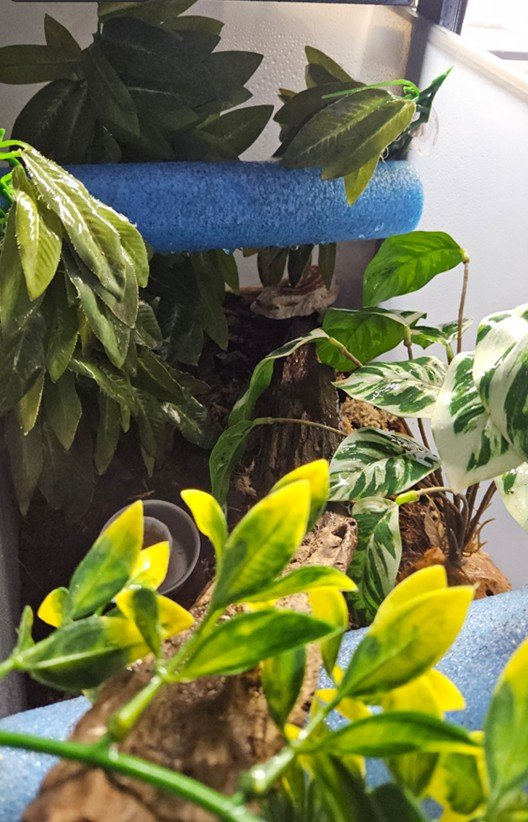
In reference to gecko keeping, clutter is all the stuff you put in their habitat to help your gecko feeling secure and safe in its home. When geckos feel safe in their environment they don’t feel like they have to constantly hide and will be more likely to explore their enclosures. Clutter includes the plants, driftwood, branches, ledges, and other terrarium accessories. Gargoyles and cresties don’t necessarily need humid hides if you are able to maintain proper humidity. he humid hide is needed to help when they are shedding and for females to use to lay their eggs. I find geckos hanging out in the humid hides a lot during the day too. See below for some great examples that some of our customers have put together for their gargs and cresties:
Spot clean the enclosure as needed- i.e. whenever you see a poo, clean it up. Disinfect and sanitize surfaces once a week. We use a rotation of F10 veterinary disinfectant and 70% isopropyl alcohol. We also use vinegar for removing calcium build-up in water dishes as we are on well water and our water is full of dissolved calcium carbonate and other minerals. Bioactive enclosures only need regular daily spot cleaning when properly maintained. Though the substrate may need partial replacement every year or so to replenish various nutrients and minerals utilized by plants and the clean-up crew. If you have many geckos or a small collection, your sanitation practices will need to be a little more involved and occur more frequently (see Gecko Health).
Racks are used by breeders, sellers, and some collectors, but I do not recommend them for most people. They are large, heavy, expensive, can be difficult to repair if something breaks, and ugly compared to a nice open-front fully planted bioactive enclosure with a custom moss-covered background. That said, it does make it easier and more hygienic to house many geckos while maintaining relatively good husbandry (so long as you put in the work!). Thankfully there are several excellent enclosures that can be stacked to save on space for those with several geckos that do not want to use racks.
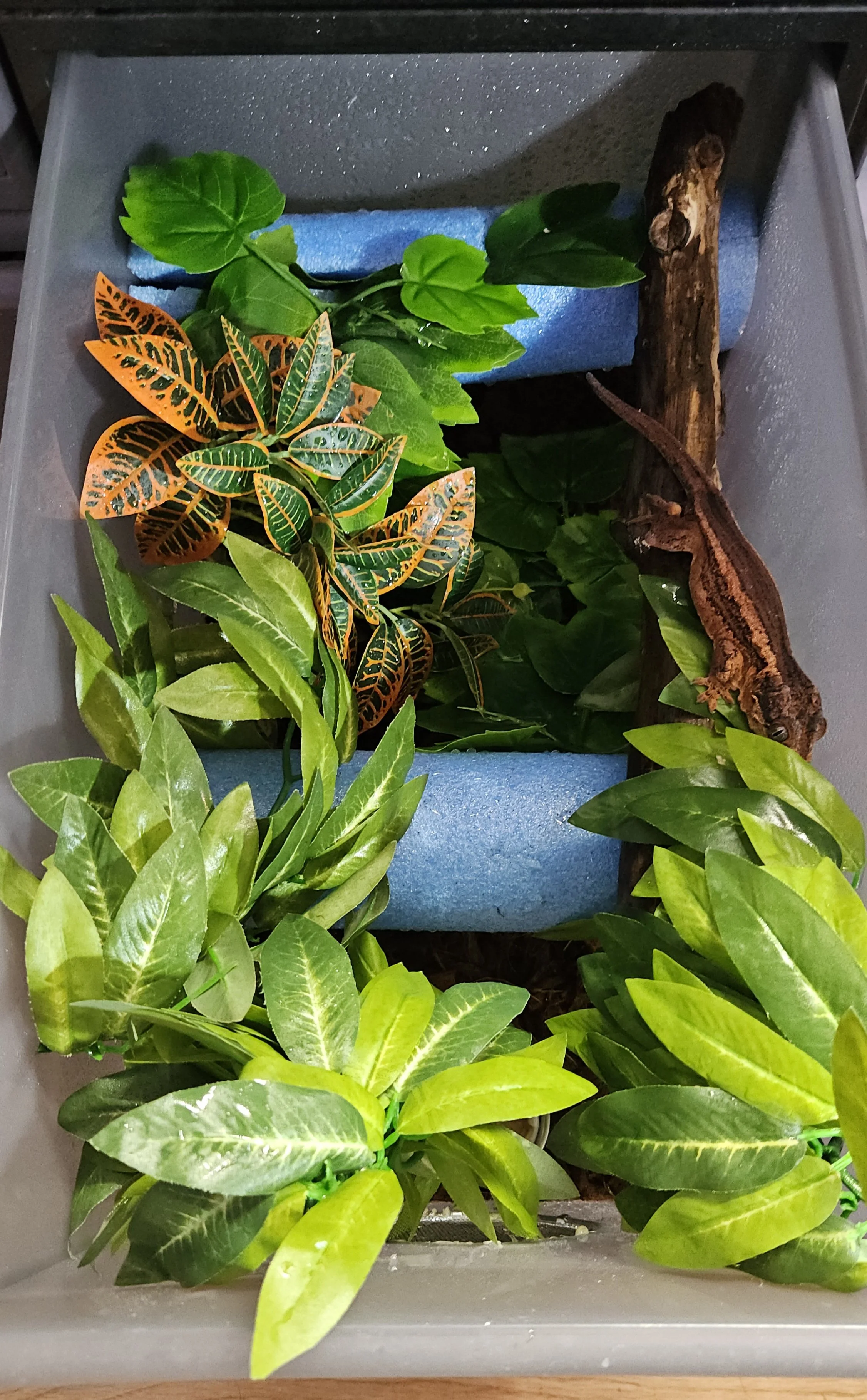
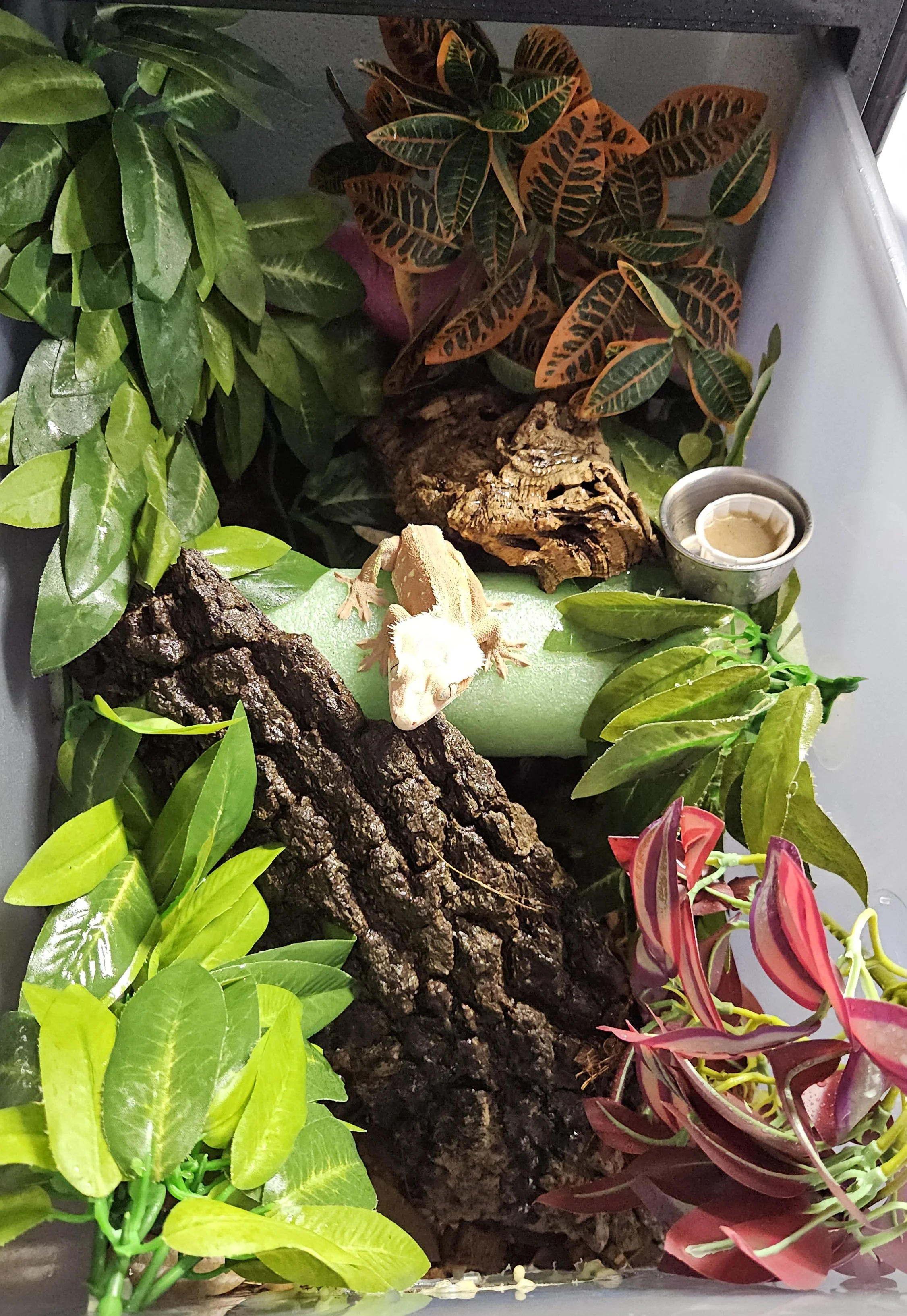
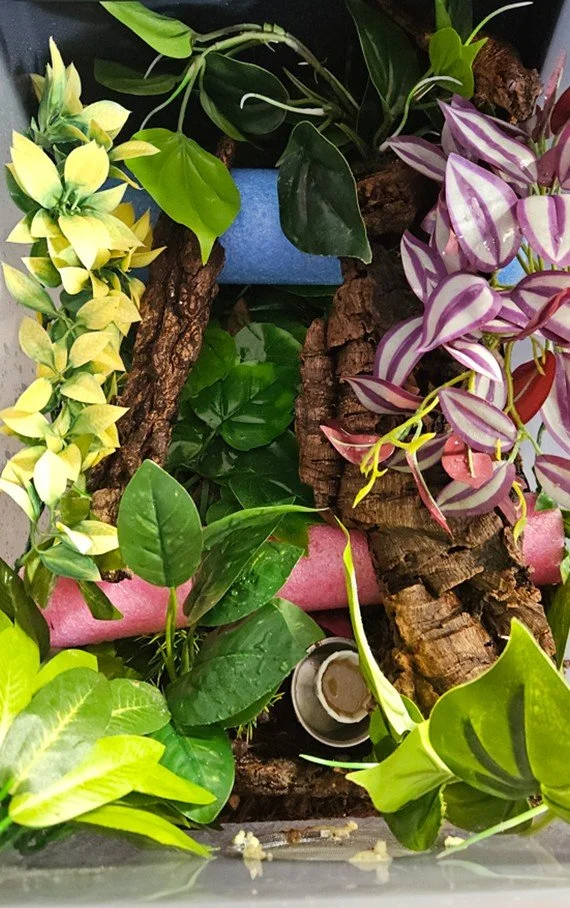
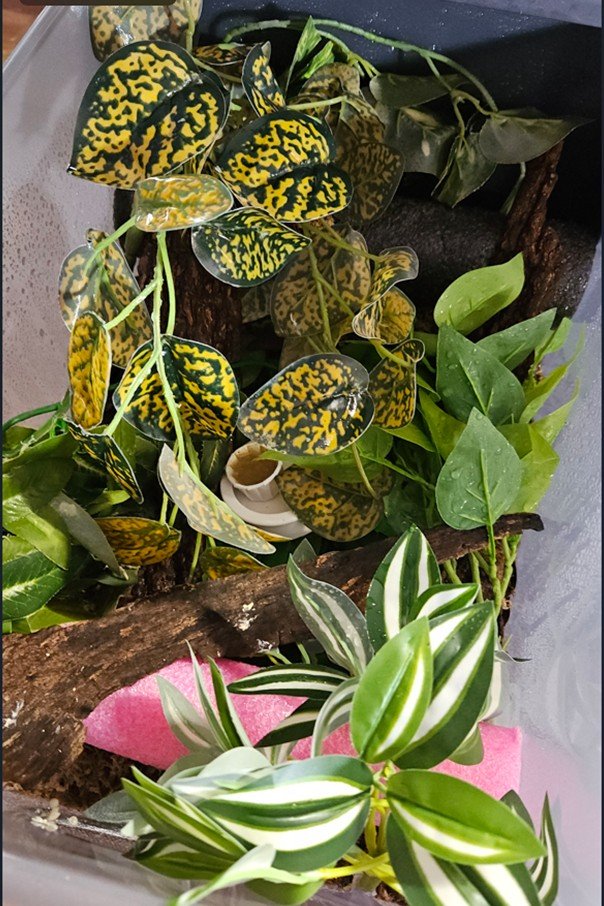
Our cresties and Gargs are housed in stacked drawer-type tubs with a 4” ventilation vent on the front (made famous by Robby of Robby’s Reptiles). These enclosures provide plenty of resting areas (including horizontal ones, which I believe helps prevent floppy tail- we have had zero cases of floppy tail in our geckos), clutter (fake plants, cork bark, oak bark, and hardwood branches), and feature a bioactive substrate that contains sphagnum moss, coconut bark fiber (fine and coarse grades), organic topsoil, and activated charcoal. We use Dairy cow, Panda, Papaya, and Dwarf White isopods, as well as Temperate White, Little Soil, and Tropical Pink springtails. Can you spot any of the geckos below?
Humidity & Hydration
Our adult cresties and gargs are on an every-other day misting schedule, while juvenile and baby cresties and gargs are misted daily. Adult enclosures with the bioactive substrate helps to keep humidity levels from dropping below 50%. That said we try to maintain our enclosures around 65-85% humidity, with spikes of up to 100% when misted. We turn the room humidifier on if enclosure humidity gets below 60%. None of our adults have had shedding issues thus far, so this has worked well for us. You may have to adjust your own misting schedule to maintain appropriate humidity levels, and this will change depending on the type of enclosures, its materials, the substrate you use (i.e. paper towel v. coco bark), use of live plants and so on.
Cresties and gargs get their hydration from licking water droplets off of leaves and other surfaces where they collect.
Temperature & Heating
Average day time high temperatures in New Caledonia average~75F in winter and ~86F in the summer, with a night time drop of around 12 degrees year-round. We keep our gargs and cresties at a room temp of 75F with highs of around 78F-80F during the summer and with a high of about 73F during the winter with night time drops of about 5-7F degrees. Our gecko room has its own air conditioner, heater and humidifier, so we can make adjustments as needed to maintain consistent temperature and humidity ranges in the room. We do not use heat lamps with our cresties or gargs, but you can provide a basking spot ~85F. Yopu must ensure that your gecko can get away from the heat source while providing a temperature gradient so they can regulate their temperature.
Always use a thermostat when using any kind of heat-generating device. I like Inkbird brand thermostats and use them on my incubators, but do not use the wifi features myself.
Though nocturnal, additional UVB lighting can help bring out natural behaviors and color, and synthesize D3. In the wild, much of the UV light gets filtered out as it descends to the forest floor, so when using one, make sure to use a light intended for tropical and forest dwelling species.
Food and water
Feeder insects, misting versus automatic sprayers; water bowls.