MORE INFO COMING SOON ! THIS PAGE IS UNDER CONSTRUCTION!
Feeder Insect Info!
Commonly commercially available feeder species include the domesticated cricket (Acheta domesticus), banded cricket (Gryllus assimilis), mealworms, super worms, silkworms, hornworms, soldier fly larvae (aka BSFL), dubia roaches, discoid roaches, and red runner roaches. We use dubia roaches, discoid roaches, banded crickets, and meal worms regularly at GwenGecko. We also occasionally treat our geckos with super worms, wax worms, silk worms and horn worms.
Recently Cricket Paralysis Virus (CRV) has spread to the US from Europe and has caused many farms to switch to the banded cricket. The species-specific virus does not affect humans, reptiles, or banded crickets. We have noticed they live much longer than the house cricket and are generally quieter, but are capable of jumping farther. They are smaller and little higher in fat, however, so something to think about if your geckos are putting on a little too much weight.
Variety is important to ensure a wide range of nutrients are made available to your gecko. I also like to believe the geckos get some enrichment by varying the live feeders they are fed. They would likely not eat just one species in the wild.
Out Crested Gecko & Gargoyle feeding routine:
We give our crested geckos and gargoyle geckos gutloaded, vtamin and calcium w/D3 dusted feeder insects once a week in addition to their meal replacement (2-3x a week, every other day for babies).
Our Leopard Gecko feeding routine:
Leopard geckos are given a dish with gut loaded insects such as smaller roaches or mealworms, and these are replaced every 2-3 days with newly gut-loaded feeders to ensure freshness & nutrition. Crickets and roaches that climb out of no-climb dishes are fed off at a rate of 3-5 insects per gecko up to 3X a week, with any they don’t eat within 15min removed.
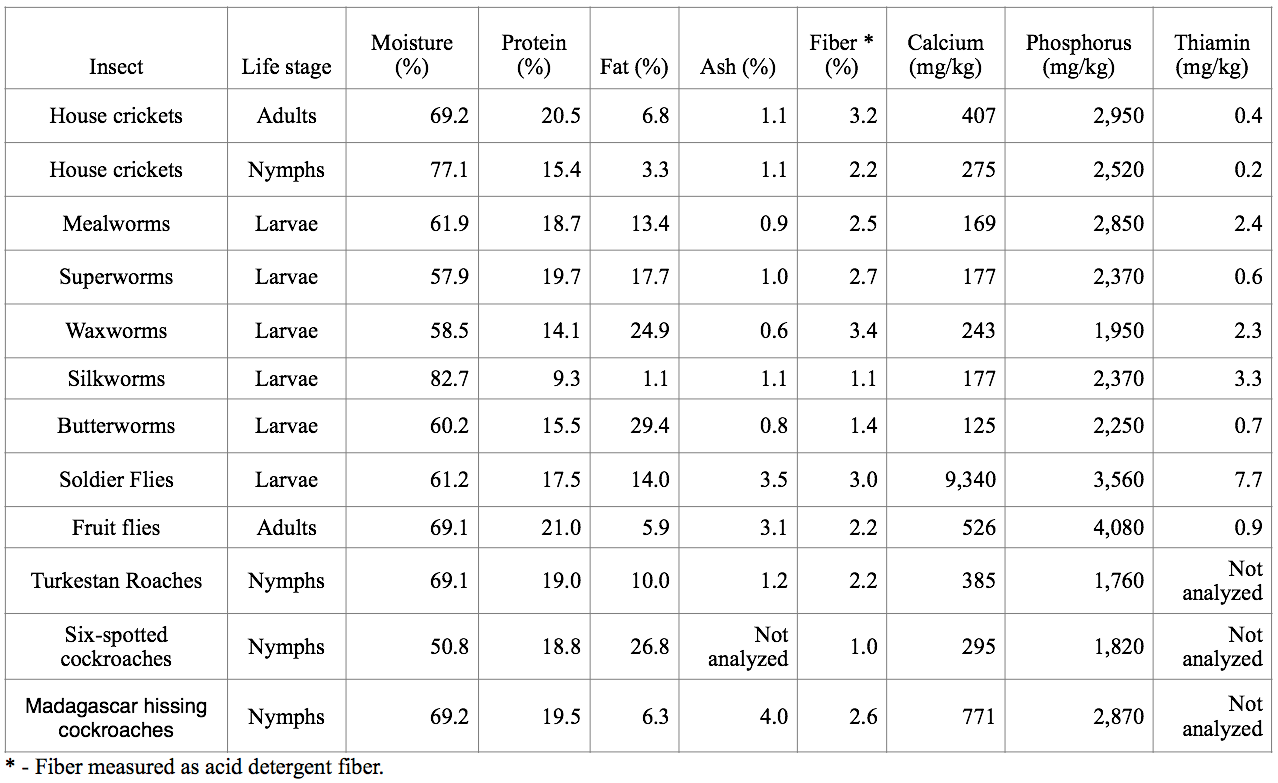
nutritional breakdown
Keeping & Breeding
Gutloading
All our insect feeders are fed nutritionally dense feeder chow (Repashy Super Load) made into a gel (also provides hydration) to feeders several hours prior to feeding off. This is not the same feed they are fed through the week (Repashy Bug Burger or cricket chow)We also feed them a variety of calcium rich green leafy greens, carrots, sweet potatoes and apples, as well as left over MRP for additional hydration throughout the week.
Feeding off
Dusting with Calcium & Vitamins
CA:P ratios
Links to great articles and websites on all aspects of keeping/feeding/nutrition etc. of feeder insects:
Feeder Insect Nutrition Facts for Reptile Keepers by Reptifiles
Nutritional Value of Commercially Raised Insects by Mike Finke (Gecko Time) - also the chart on the right.
Feeder Insects Guide by Specialty Serpents: https://specialtyserpents.com/index_htm_files/FeederInsectsGuide.pdf
There Are Amazing Feeder Insects You Don't Even Know Exist... Yet! - Great video by Clint’s Reptiles
Do Crickets Give Reptiles Parasites? - a very interesting read by Dubia.com that emphasizes the importance of sanitation when keeping and rearing feeder insects to limit parasite infestation.